what is the requirement to be a city
Whatever the perceived strengths and weaknesses of your city's brand, one thing appears unarguable, and that'due south the value of being identified as a metropolis in the first place.
In the US midwest, absolutely, the word "city" has been appended with abandon to any one-brothel main street that once offered relief to travellers beyond the prairies. Likewise Commonwealth of australia, where Melbourne suburbs style themselves as cities and outback dots such as the City of Dubbo appear on the map. This is the pioneer spirit at work – echoing ancestors' hopes and ambitions for these remote settlements.
Nowadays, notwithstanding, towns everywhere seem to have aspirations to brand themselves with city condition – and sometimes even that isn't enough, when there is too a "global metropolis" or "city of culture" title to be garnered. Beyond the brand blather, does the city distinction actually matter? I think so – but that we need a more discerning definition of the title (and, for that matter, subtitles such as "eco-city", "smart urban center" and the like).
And and then to fledgling Ebbsfleet Garden City, a clip-on surburb planned in the eastern periphery of London that was recently (re)appear by the United kingdom of great britain and northern ireland's chancellor, George Osborne.
In name at least, Ebbsfleet echoes the ambition of the garden cities movement that first gained traction at the kickoff of the terminal century, and led to the establishment of Letchworth Garden Urban center and Welwyn Garden Urban center every bit a reaction to England'southward overcrowded, high density, polluted majuscule. In a garden metropolis, healthy, peaceful residents were envisioned every bit having the physical space to grow their greens and the mental space to amend themselves of an evening at educational institutes, rather than drink their mode through their wage parcel at the local.
While utopian in vision, low-density "cities" such as these are, as a concept, greatly anti-urban. Many places effectually the world that take been founded on this model have suffered similar issues – from the pragmatic (not plenty people to support decent public send) to the existential (they are slow).
The unofficial "city" moniker seeks to big them up but Letchworth and Welwyn, no thing how pleasant to some, unequivocally remain towns. The truth is, we know this instinctively when nosotros visit such places – in that location is something city-ish missing.
The UK has, for centuries, regulated which settlements can title themselves a city. Under Henry 8, the presence of a diocesan cathedral was unremarkably enough to guarantee the claim. Size didn't matter so much as the practise of power – spiritual or temporal.
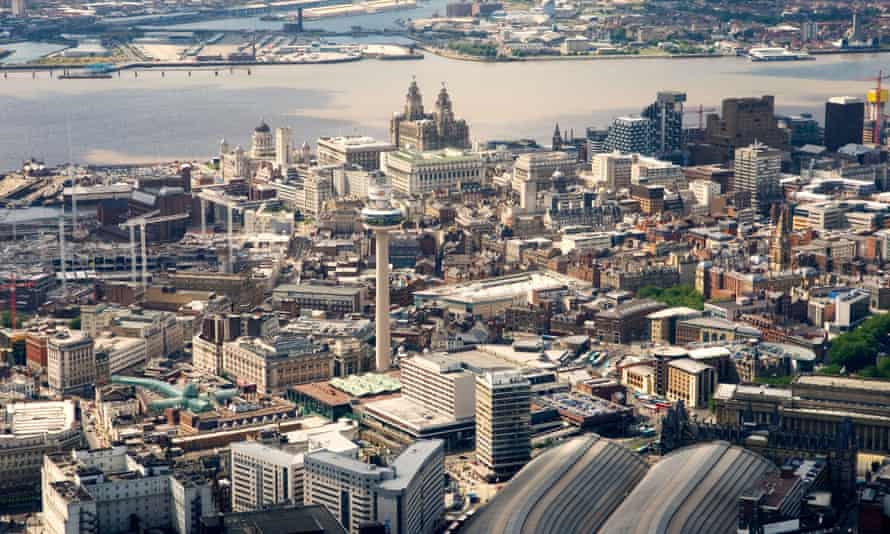
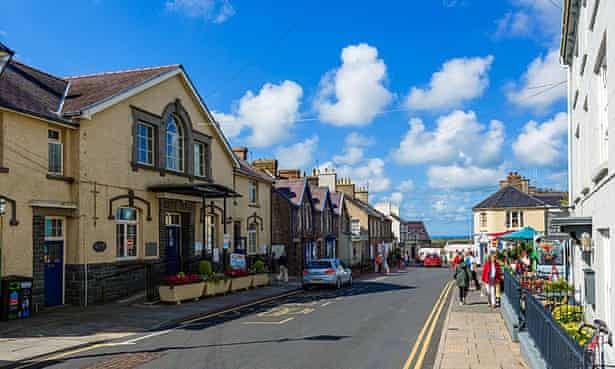
This was clearly getting ridiculous by the mid-19th century, when the booming English language industrial centres of the north and Midlands remained towns while St David'south (population c.2000) on the west coast of Wales enjoyed the urban center mantle. Manchester finally won city status in 1854 and Liverpool in 1880 – Birmingham had to expect until 1889 when the requirement to have an Anglican cathedral was dropped. Leeds and Sheffield followed in 1893 while Bradford, Hull and Nottingham got the gig in 1897, the year of Queen Victoria'south Diamond Jubilee.
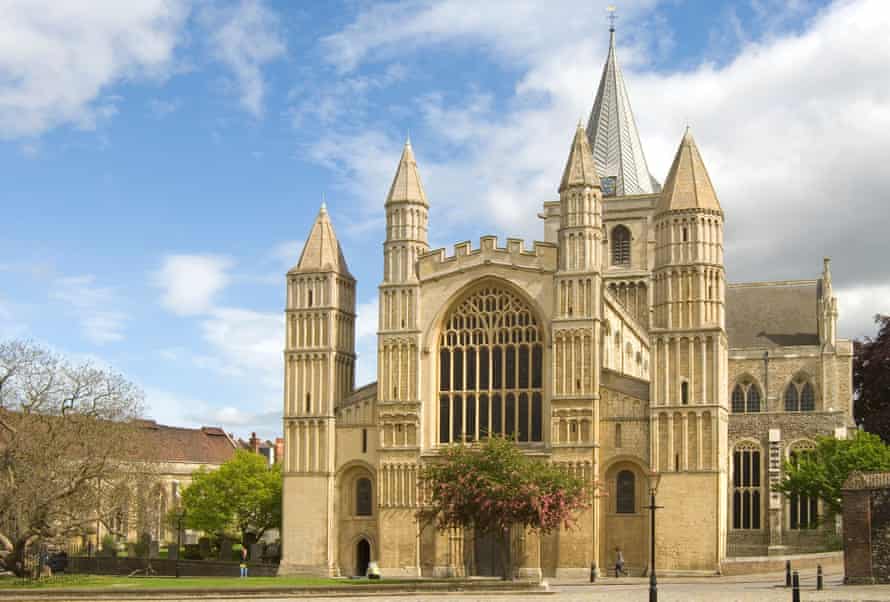
Today, the Great britain'south official criteria for what constitutes a city remain opaque, but those put in identify in 1907 remain a good dominion of thumb: home to at least 300,000 residents, a distinct identity that is the heart of a wider surface area, and a good record of local government. There are now 69 official UK cities (there would be lxx simply Rochester, a cathedral city since 1211, became a boondocks in 1998 after information technology neglected to confirm its status following local regime reorganisation).
Naturally, the purple connection remains important too. The elevation of Great britain towns to urban center status through the effect of letters patent is all the same the prerogative of the monarch (on the advice of ministers) and royal celebrations are usually occasion for anointing new ones. In England, Chelmsford won the laurels awarded in 2012 to marking Queen Elizabeth's own diamond jubilee.
Milton Keynes remains a biting loser in these fierce contests, fifty-fifty if the status is purely honorific with no boosted powers attached to it. Milton Keynes council argues that: "Metropolis condition is thought to be a natural progression to farther heighten the borough's profile economically, and to highlight to the rest of the country and worldwide the success story that is Milton Keynes."
Status is the key word hither, but the prestige that the city championship brings is a very British obsession. In French republic, ville (town) does service equally for everywhere from a small-scale regional centre to Paris itself, while cité is used for everything that's "full-bodied", from a museum to a housing estate.
Beyond official designations though, economists, geographers and archaeologists have long debated what existence a boondocks or urban center ways. In the ancient world, factors such as trade, specialised occupations, monumental buildings and taxes paid to a ruler have all being taken into account, with a city typically differentiated from a town by its relative size and composure in comparison to its hinterland.
On this footing peradventure Milton Keynes has a bespeak – merely cities are surely more this. The centre of an ancient Greek city country was its agora – a place of assembly, for the exchange of ideas amid the free-built-in also as of appurtenances. I'm not sure whether Milton Keynes quite counts, despite the presence of the Open up University and a shopping center for its free-built-in wages slaves.
Just above all, a urban center, rather than a village green, is a identify, as the writer Richard Sennett put information technology, where strangers meet; where new ideas are formed in a public space. A common ground.
Developers seem ever more than dandy to label a identify a "tech metropolis", a "media city" or a "smart city" to connote this notion of exchange and innovation. Only truthful cities are dumbo, messy, uncontrolled and cosmopolitan – the opposite of garden cities or self-styled "part hubs". The builder Sir Terry Farrell's recent recommendation to government, that each boondocks or city should have an "urban room" to argue its own futurity, is a reflection of a decline in these genuine mutual grounds and the rise of privatised "public" space.
Ultimately, perhaps the truthful definition of a city can be found in the phenomenon of "urbicide" – the deliberate devastation of cities. In war and in peace, this happens where the cosmopolitan is treated with suspicion and where strangers, differences and otherness cannot exist tolerated. True cities should never take such smalltown mentalities. Their inhabitants are worldly citizens, non parochial townsfolk.
Robert Bevan is a writer on architecture and cities, and a regeneration consultant.
More in our City Branding series
Sharon Zukin on the big business of urban center branding
Quiz: can you identify these cities from their logos?
What should your metropolis's slogan be?
The worst city tourism videos
Source: https://www.theguardian.com/cities/2014/may/08/what-makes-city-tech-garden-smart-redefine
0 Response to "what is the requirement to be a city"
Post a Comment